



recommend
Send Us A Message
Choosing Titanium Dioxide for Exterior Coatings: Surface Treatment and Durability
Choosing Titanium Dioxide for Exterior Coatings: Surface Treatment and Durability
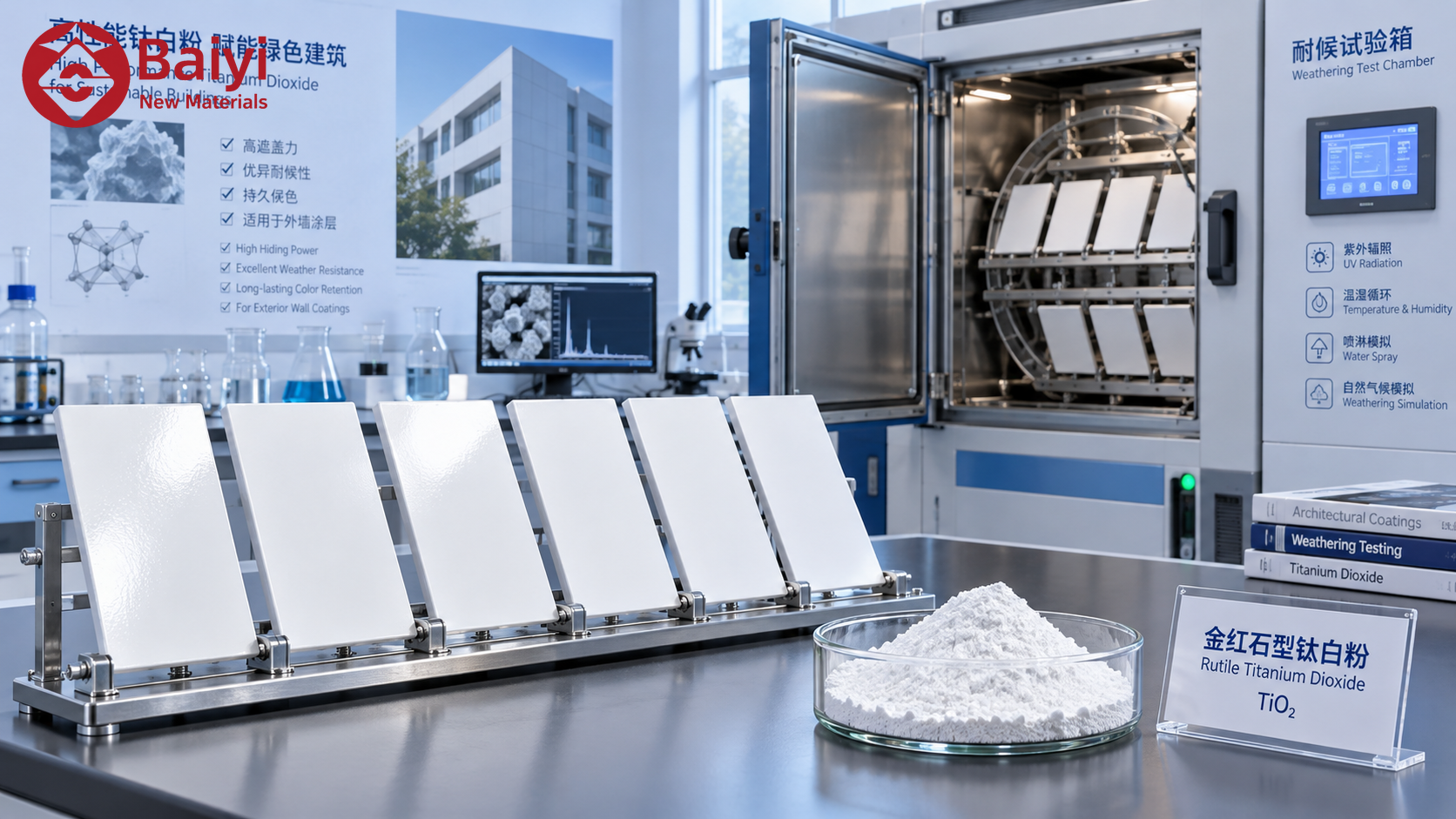
Two exterior paints can show similar whiteness and hiding power at application, yet weather very differently. Selecting Titanium Dioxide therefore means looking beyond the initial drawdown. Crystal form, surface treatment, and dispersion behavior all influence how well the coating resists chalking and retains gloss. The practical question is not simply which pigment is most durable, but which grade delivers dependable performance in your binder, at your pigment volume concentration, and under the intended exposure.
Start with rutile, then examine the treatment
Rutile is generally the preferred crystal form for exterior coatings because it offers stronger light scattering and better weathering resistance than anatase. However, “rutile” alone is not a durability specification. Titanium dioxide can promote photochemical reactions under UV exposure; without adequate protection, these reactions can contribute to binder degradation, leaving loose pigment at the surface as chalk.
Silica- and alumina-based surface treatments help control pigment–binder interactions and reduce photocatalytic effects. A sufficiently continuous, dense silica layer can act as a protective barrier. Alumina treatments also influence wetting, dispersant adsorption, and dispersion stability. Their roles overlap and depend on how the treatment is deposited—not merely which oxides appear on the technical data sheet.
That distinction matters when comparing grades with similar reported treatment levels. Bulk silica or alumina content does not establish coating continuity, porosity, or uniformity. Ask whether the supplier has comparative weathering results for the grade in a relevant coating system, rather than ranking products by treatment percentage alone.
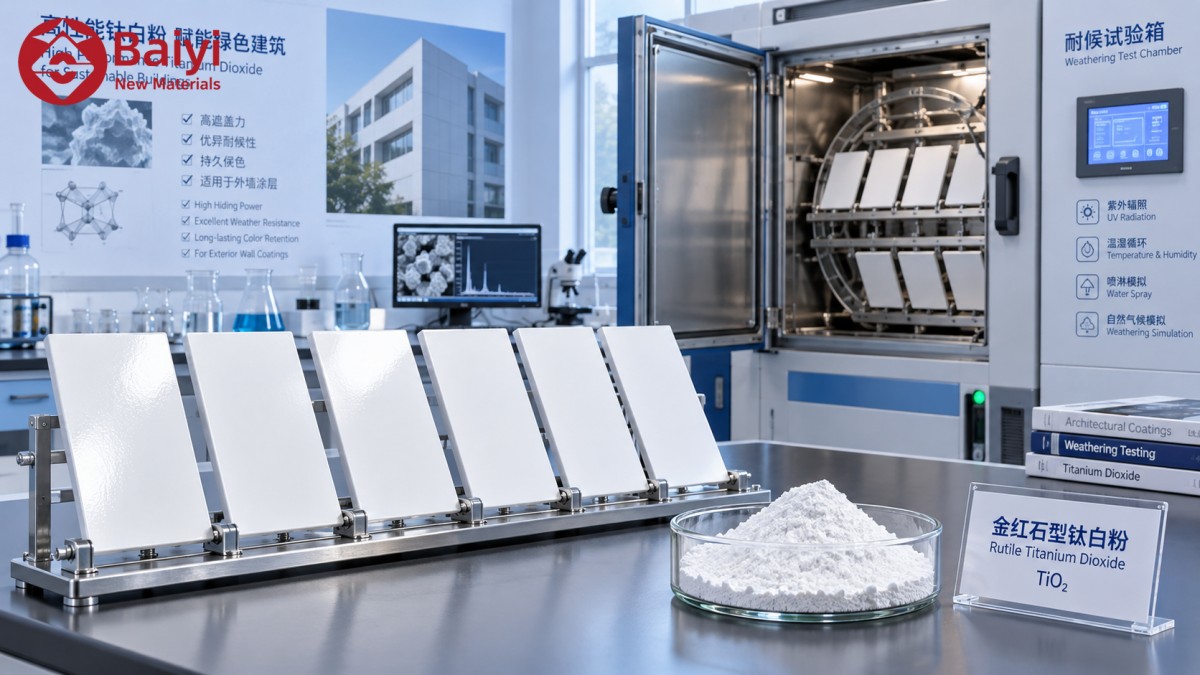
More treatment is not automatically the better choice
A highly treated exterior grade may be appropriate for a demanding architectural finish, but it can also change dispersant demand, viscosity, and optical efficiency per unit mass. Some treatments increase oil absorption, affecting formulation latitude. Organic surface treatments may improve handling or wetting, but should not be mistaken for the inorganic barrier responsible for much of the pigment’s photochemical protection.
For a high-gloss acrylic finish, dispersion quality and flocculation control deserve close attention: a weather-resistant pigment that produces poor gloss in the actual formulation is not a successful substitution. In a high-PVC masonry paint, binder availability and film porosity may dominate the outcome. A pigment upgrade cannot compensate for an underbound film or an unsuitable binder.
Run two comparisons where practical: a controlled substitution to expose differences, followed by an optimized formulation using each grade’s appropriate dispersant dosage. Otherwise, the trial may measure an additive mismatch rather than pigment suitability. Record grind quality, viscosity after storage, tint strength, gloss, and application behavior—not just fresh-paint opacity.
Read durability data as a test description, not a promise
“Excellent weatherability” has little decision value without the exposure conditions. Xenon-arc testing under methods such as ASTM G155 and fluorescent-UV testing under ASTM G154 use different light sources and exposure cycles. Results should not be treated as interchangeable, and accelerated test hours should not be converted directly into outdoor service years.
- Confirm binder type, PVC, film thickness, substrate, and cure conditions before comparing results.
- Check the lamp or filter, moisture cycle, temperature conditions, and total exposure—not just the test method number.
- Review chalking alongside gloss retention and color change. ASTM D4214 provides methods for evaluating exterior-paint chalking; the specific procedure should be identified.
- Use an established control coating in accelerated and outdoor trials so the results have a practical reference.
Exposure location also matters. Hot, humid conditions and intense solar exposure can reveal weaknesses that a milder exposure does not. For a new formulation, accelerated screening is useful for eliminating poor candidates; outdoor panels in a relevant climate provide a separate check before making long-term durability claims.
Make the final decision on the finished coating
Commercial qualification should include lot consistency, specification limits, sample traceability, and notification of manufacturing changes. Shandong Carbon Steel Metal Products Co., Ltd., founded in 2008, supplies chemical raw materials, surfactants, polymers, and additives internationally. Its stated automated production, quality-control, and technical-support capabilities are relevant to supply evaluation, but grade-specific documentation and formulation trials remain necessary for exterior pigment approval.
Compare cost at the required hiding power and accepted durability, not simply per kilogram of pigment. Shortlist exterior rutile grades with documented surface treatment, test them in the intended binder, and approve the formulation against a known benchmark. If a cheaper grade needs more pigment, extra dispersant, or compromises weathering performance, its purchase price is not the useful measure.